Getting a sectional door repaired or serviced
Sectional garage door repair: common faults and how they are fixed
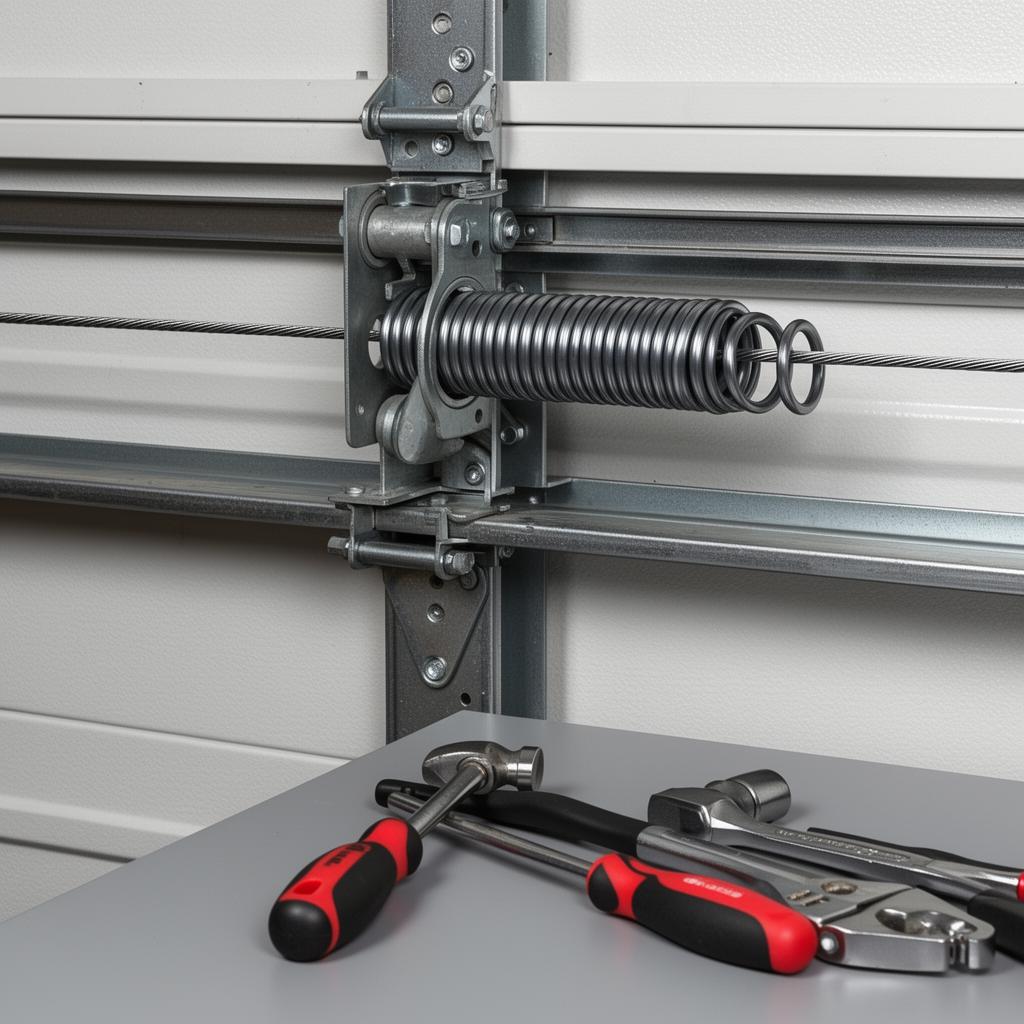
Most sectional garage door faults come from one of five places: the torsion springs above the opening, the lifting cables, the rollers in the side tracks, the hinges between panels, or the motor. A sectional door can almost always be repaired rather than replaced, because each of those parts can be changed on its own while the panels stay in place.
We repair sectional doors on homes and commercial units across Northern Ireland and offer 24/7 call-outs for doors that are stuck open or unsafe. This page explains what each fault looks like so you can describe it clearly when you ring, and which checks are safe to make before anyone arrives.
- Door type
- Sectional, domestic and commercial
- Common faults
- Springs, cables, rollers, hinges, motor
- Call-outs
- 24/7
- Usual outcome
- Part replaced, panels kept
How a sectional door works, in one paragraph
A sectional door is a stack of horizontal panels joined by hinges. Each panel carries rollers at its ends that run in a vertical track, which curves round to run horizontally under the ceiling. A pair of steel cables runs from the bottom corners of the door up to drums on a shaft above the opening, and torsion springs on that shaft store the energy that makes a heavy door feel light. The motor, if there is one, only guides the door; the springs do the lifting. Knowing that makes most faults easy to place.
Fault by fault
These are the symptoms we are called out for most often on sectional doors, with the part that is usually responsible.
| What you notice | Usual cause | Safe to touch? |
|---|---|---|
| A loud bang, then the door will not lift | Broken torsion spring | No |
| Door hangs lower on one side | Slack or snapped cable | No |
| Grinding or juddering as it moves | Worn or seized rollers | Look only |
| Gap opening between two panels | Cracked hinge or loose fixings | Look only |
| Motor hums but nothing moves | Spring, cable or motor fault | Stop using it |
| Door stops and reverses | Safety sensor or force setting | Clean sensors |
Springs and cables: leave these alone
Torsion springs are wound under high tension, and the cables are what hold the door against that tension. A snapped spring or a cable that has jumped off its drum can release that energy suddenly. Do not try to wind a spring, refit a cable or lift the door by hand to get the car out. Keep people clear of the opening, disconnect the motor if it keeps trying, and ring us: this is exactly what the 24/7 call-out is for.
On a domestic sectional door we normally replace springs in pairs, because the one that has not broken has done the same number of cycles and is close behind. Cables are checked and replaced at the same time if they show fraying.
Rollers, hinges and tracks
Rollers and hinges wear gradually. You will usually hear them before you see a problem: a rumble, a click at the same point every cycle, or a door that sounds rougher in cold weather. Worn rollers are swapped one at a time; cracked hinges are replaced and the panel fixings retightened. Tracks that have been knocked by a car can often be straightened and re-plumbed rather than replaced.
- Look along each track for dents or a section that has pulled away from the wall.
- Check that every hinge has all its screws and none are cracked across the knuckle.
- Watch the rollers: each should turn, not slide, as the door moves.
- Wipe grit from the tracks; do not grease them, as grease collects dirt.
Panels and seals
A dented bottom panel is the most common cosmetic damage, usually from a car or a bin. Depending on the make and age of the door, a single panel can sometimes be replaced; our panel replacement guide explains when that works. Perished bottom and side seals let water and draughts in and are a simple swap that makes a noticeable difference in winter.
What happens on a repair visit
The engineer makes the door safe first, then runs it through its full travel to see every symptom rather than only the one you called about. Once the faulty part is replaced, the door is rebalanced so it holds at half height by hand, the motor limits and force are reset, and the safety reversal is tested. If the door is beyond sensible repair we will say so, and explain why, rather than keep patching it.
Questions we get asked
- Can a sectional garage door be repaired, or does it need replacing?
- Most can be repaired. Springs, cables, rollers, hinges and seals are all replaceable parts, so replacement only makes sense when the panels themselves are badly damaged or parts are no longer available.
- Is it safe to open a sectional door with a broken spring?
- No. The door is far heavier than it feels when the springs are working and can drop without warning. Leave it where it is and call for a repair.
- Do you repair sectional doors you did not fit?
- Yes. We repair sectional doors on homes and commercial premises across Northern Ireland whoever installed them.
- Can I get a sectional door repaired out of hours?
- Yes, we offer 24/7 call-outs for doors that are stuck, will not close or are unsafe.
- How can I make my sectional door last longer?
- Keep the tracks clean, listen for new noises, and have the springs and balance checked periodically. Our maintenance checklist covers the routine in full.
Sectional door playing up?
Describe what it is doing and whether it is open or closed, and we will arrange a repair. Call-outs are available 24/7.
Based at 31 Mount Street, Dromore (BT25) · covering Northern Ireland · 24/7 emergency repairs