Research on improving garage door security
Garage door security upgrades worth paying for
A garage is often the least protected entry point on a house, particularly where it connects directly to the hallway or kitchen. Older up-and-over doors with a single central latch are straightforward to force, and many remotes still in use send a fixed code that can be captured and replayed.
This guide covers the upgrades that make a measurable difference, and is written without reference to any particular insurer's requirements, since policies vary and you should check your own documentation for what is expected of you.
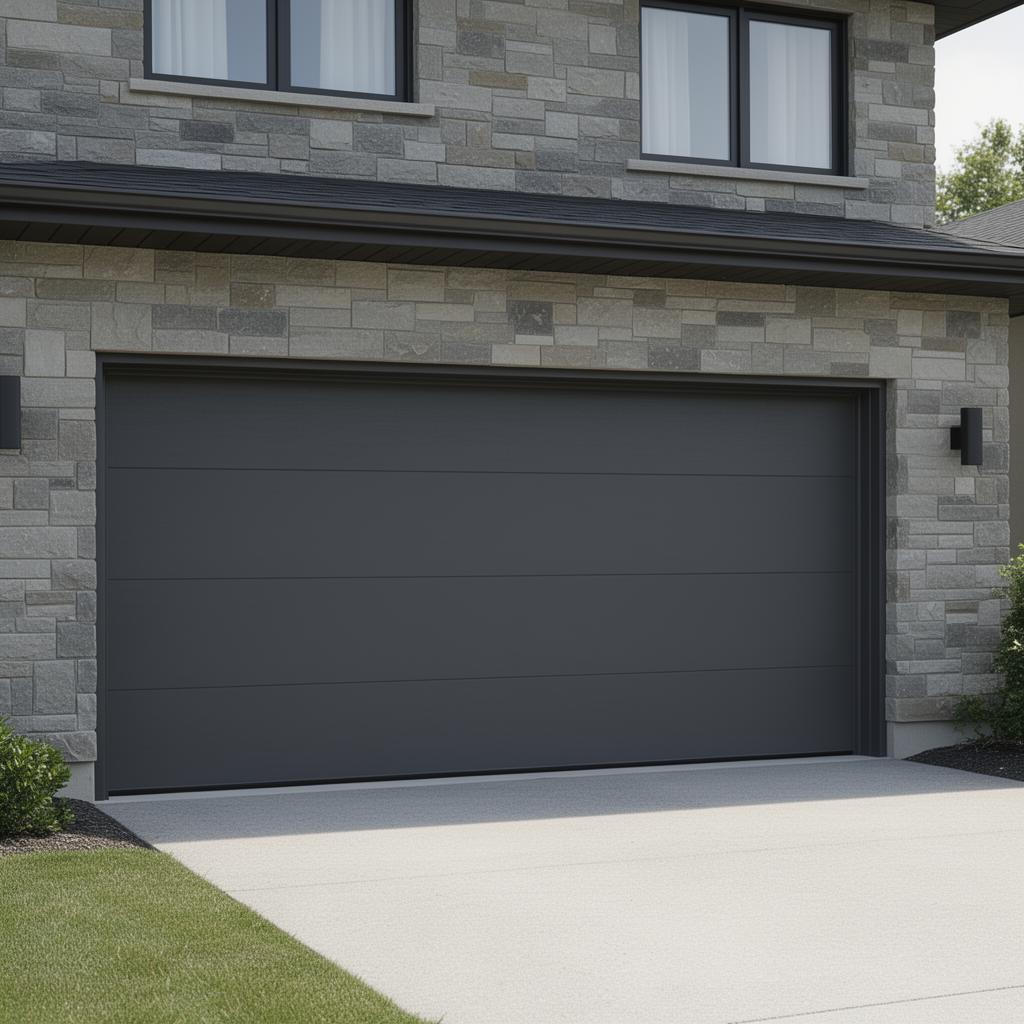
- Weakest point on old doors
- Single central latch
- Fixed-code remotes
- Vulnerable to code capture
- Rolling-code remotes
- Standard on modern motors
- Multi-point locking
- Distributes load across the frame
Anti-lift devices
Roller and sectional doors can, in theory, be forced upward from the bottom edge if there is nothing physically stopping the curtain or panel travelling in its track when unpowered. An anti-lift device is a simple mechanical stop, sometimes a bolt, sometimes a cam, that prevents the door being lifted from outside even if the motor is not engaged.
This is a low-cost addition on most doors and is one of the more effective single upgrades on an electric roller, since without it the motor is doing all the security work on its own.
Multi-point locking
A door secured at one central point concentrates all the resistance in a small area, which is exactly where a forced-entry attempt applies leverage. Multi-point locking spreads the securing points along the width of the door, engaging the frame at several locations at once so no single point takes the full load.
This is standard specification on quality side-hinged and sectional doors and worth checking for specifically when comparing quotes, since some budget doors omit it to save cost.
Rolling-code remotes
Older fixed-code remotes send the same signal every time, which means the signal can be intercepted and replayed by anyone with the right equipment nearby. Rolling-code (sometimes called hopping code) systems change the transmitted code on every use, synchronised between the remote and the motor, so a captured signal cannot be reused.
Most motors sold and fitted now use rolling code as standard, but doors that have not been touched in ten or fifteen years may still be running an older fixed-code system and are worth checking.
- Check the remote type before assuming an older electric door is as secure as a new one.
- A motor upgrade alone, without changing the door, often resolves this.
- Lost or stolen remotes should be deleted from the motor's memory rather than left active.
- Smartphone-based control removes the physical remote from the equation entirely.
Lighting and visibility
A dark driveway or side access gives cover to anyone attempting to force a door unseen. A motion-triggered light over the garage door, or as part of the wider house lighting, is inexpensive and removes that cover without requiring any change to the door itself.
Clear sightlines matter too. Overgrown hedging or a fence panel that blocks the door from the road or a neighbouring window makes forced entry attempts less likely to be noticed.
Alarm interfaces
Some garage door motors can be wired or paired to a house alarm system so that unexpected movement of the door while the alarm is set triggers a response, in the same way a window or interior sensor would. Whether this is straightforward depends on the alarm system and the motor, and it usually needs a contact or sensor added at install rather than being automatic.
If you already run a monitored alarm, ask your alarm provider or installer whether your specific system supports a garage door contact before assuming it is included.
What to check before assuming your door is secure
Security is a combination of the door's own construction, the locking mechanism, the motor, and how well all of it has been maintained. A well-specified door that has not been serviced in years can develop play in the track or hinges that undermines the locking, so an annual check is as much a security measure as a maintenance one.
- Confirm whether your door has an anti-lift device fitted, particularly on rollers.
- Check the locking is multi-point rather than a single central latch.
- Establish whether your remote uses rolling code or an older fixed code.
- Add motion lighting if the door sits somewhere unlit or out of view.
- Review your own insurance documentation for any specific lock standard it requires, since this varies by policy.
Questions we get asked
- Can I add an anti-lift device to my existing door?
- In many cases yes, it can be retrofitted to an existing roller or sectional door during a service visit. Whether it suits your specific door depends on the track and curtain type, so it is worth asking an engineer to check.
- Is a smart lock the same as multi-point locking?
- No, they solve different problems. Multi-point locking is a mechanical feature of the door itself; a smart lock or app-controlled system manages who can operate the door and when. Both can be present on the same door.
- Will upgrading security reduce my insurance premium?
- That depends entirely on your insurer and policy, and we cannot make claims on their behalf. Check your own documentation or ask your insurer directly what security measures they recognise.
- How do I know if my remote uses fixed or rolling code?
- Age is a rough guide, remotes and motors from the last decade or so are almost always rolling code, but the only reliable way to confirm is to have an engineer check the motor during a service or upgrade visit.
- Does a heavier door mean a more secure door?
- Not necessarily. Weight alone does not resist forced entry as effectively as proper locking points and an anti-lift device. A lighter door with good locking can outperform a heavy one with a single latch.
- Can these upgrades be done without replacing the whole door?
- Most of them, anti-lift devices, remote upgrades, lighting and alarm interfaces, can be retrofitted to an existing door. Multi-point locking sometimes requires a new door if the existing frame was never built to accept it.
Have your door's security checked properly
An engineer can assess your existing locking, remote type and anti-lift protection during a visit and recommend upgrades without pushing a full replacement you do not need.
Based at 31 Mount Street, Dromore (BT25) · covering Northern Ireland · 24/7 emergency repairs