Research on maintaining high-speed and industrial doors
Industrial door maintenance: keeping high-cycle doors running
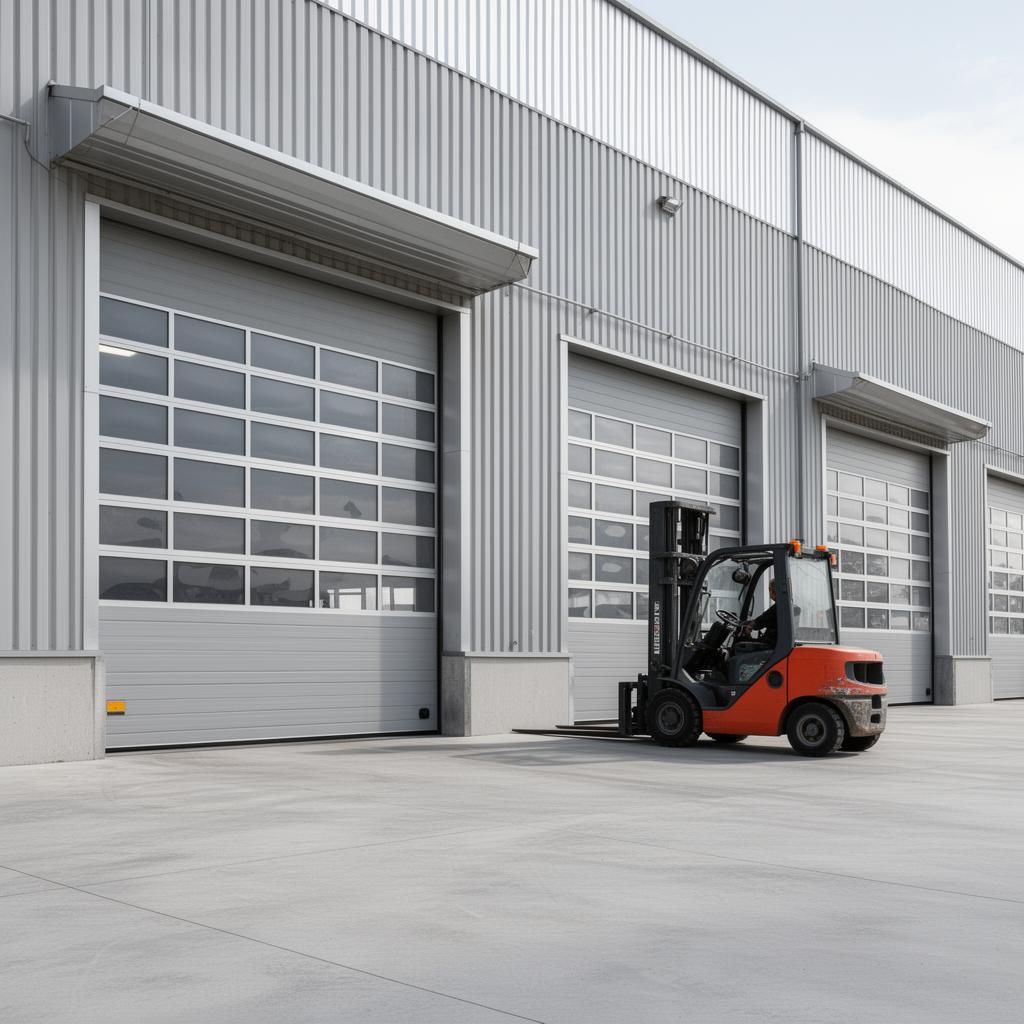
An industrial or high-speed door on a warehouse, distribution unit or production line can cycle dozens or hundreds of times a day, far beyond anything a domestic garage door experiences. That cycle count means wear happens faster and more predictably, which makes planned maintenance genuinely cost-effective rather than a nice-to-have.
This guide covers what a sensible maintenance schedule looks like, why downtime costs more than the maintenance itself, and the specific points on high-speed and industrial doors that fail most often when neglected.
- Typical cycle count
- Dozens to hundreds per day
- Common failure area
- Guides, seals and safety edges
- Recommended check frequency
- Quarterly for high-cycle doors
- Downtime cost
- Often exceeds the repair cost itself
Why planned maintenance pays for itself
The direct cost of a maintenance visit is usually small relative to the cost of an unplanned failure. A high-speed door stuck open or shut on a loading bay can halt goods movement, expose a unit to weather and unauthorised access, and in some cases stop a production line entirely until it is fixed. Planned maintenance catches the wear that leads to those failures while it is still a minor adjustment rather than an emergency call-out.
This is a different calculation to a domestic garage door, where a fault is inconvenient but rarely has a direct cost attached to every hour it remains broken.
A sensible maintenance schedule
Frequency should scale with cycle count and how critical the door is to the site's operation, not follow a single fixed interval for every door in a building.
| Door type / use | Suggested check frequency | What is checked |
|---|---|---|
| High-speed door, high cycle count | Quarterly | Guides, curtain condition, safety edges, motor, controller |
| Industrial sectional, moderate use | Twice yearly | Springs, cables, rollers, panel condition, seals |
| Low-use secondary door | Annually | General condition, lubrication, safety device test |
| All doors, any frequency | Ongoing | Visual daily check by site staff for obvious damage |
Common failure points
Most unplanned stoppages trace back to a small number of components that see constant movement or impact.
- Guide rails: forklift or vehicle impact knocks alignment out, causing the curtain or panel to bind.
- Safety edges and photocell sensors: dirt, damage or misalignment causes false triggers or, worse, a failure to trigger.
- Springs and counterbalance systems: fatigue from high cycle counts is predictable and should be checked on a schedule, not left until failure.
- Seals and brushes: wear here lets weather and debris into the mechanism, accelerating other failures.
- Motor and controller: overheating or worn components under heavy duty cycles are the most common cause of a door that simply stops responding.
The real cost of downtime
For a loading bay or production-line door, unplanned downtime cost is rarely just the repair invoice. It includes lost throughput, staff standing idle, goods left exposed, and in some cases knock-on delays to deliveries or contracts further down the chain. A planned maintenance contract converts an unpredictable cost into a scheduled, budgeted one.
Sites that track this properly usually find the maintenance spend is a small fraction of even a single serious unplanned stoppage, which is the argument for treating maintenance as an operational cost rather than a discretionary one.
What a maintenance visit should cover
A proper visit is more than a quick look and a squirt of lubricant. It should include a physical check of the components most prone to wear, a function test of safety devices, and a written record so that trends, a spring nearing end of life, a controller drawing more current than before, are visible over time rather than discovered only on failure.
- Full function test including safety edges and photocells, not just open and close.
- Visual inspection of guides, curtain or panels, and fixings.
- Lubrication of moving parts appropriate to the door type.
- Written condition report identifying anything approaching end of life.
- Clear escalation path to book a repair before the item actually fails.
Choosing a maintenance provider
For sites running high-speed or industrial doors, look for a provider who can respond quickly to a genuine breakdown as well as run the scheduled visits, since the two are connected: a maintenance contract is only as good as the response behind it when something does fail unexpectedly.
Questions we get asked
- How often should a high-speed door be serviced?
- For doors with high cycle counts, a quarterly check is a reasonable baseline, with more frequent attention to safety edges and photocells if the door operates in a busy vehicle or forklift area.
- What is the most common cause of an industrial door failure?
- Guide rail misalignment from vehicle or forklift impact, and worn or dirty safety edges and photocells, are among the most frequent causes of unplanned stoppages.
- Can staff do any of the checks themselves between service visits?
- Yes, a daily visual check for obvious damage, unusual noise or slow operation is worth building into a site routine, alongside the scheduled professional service visits.
- Is a maintenance contract worth it for a single door?
- It depends on how critical that door is to operations. A door on a busy loading bay or production line usually justifies a contract even on its own, given the cost of unplanned downtime.
- How quickly can a breakdown be attended to?
- Response times depend on the provider and contract terms. When arranging a contract, confirm the agreed response window for a genuine breakdown, not just the scheduled visit frequency.
- Do industrial doors need different maintenance to standard garage doors?
- Yes, the cycle counts and safety systems involved, particularly on high-speed doors, mean more frequent and more technical checks than a domestic door typically needs.
Set up planned maintenance before the next breakdown
We can assess your current doors, recommend a maintenance schedule matched to how they are used, and provide a clear response route for emergencies.
Based at 31 Mount Street, Dromore (BT25) · covering Northern Ireland · 24/7 emergency repairs