Comparison before choosing a door type
Roller vs sectional garage doors: which suits your garage?
Roller and sectional doors solve the same problem in different ways. A roller coils into a box above the opening; a sectional lifts in panels and sits horizontally under the ceiling. Both avoid the swing-out arc of an old up-and-over, so both work on a short driveway.
The right answer usually comes down to what is behind the opening, how much headroom, how much ceiling depth, and whether the garage is heated or attached to the house.
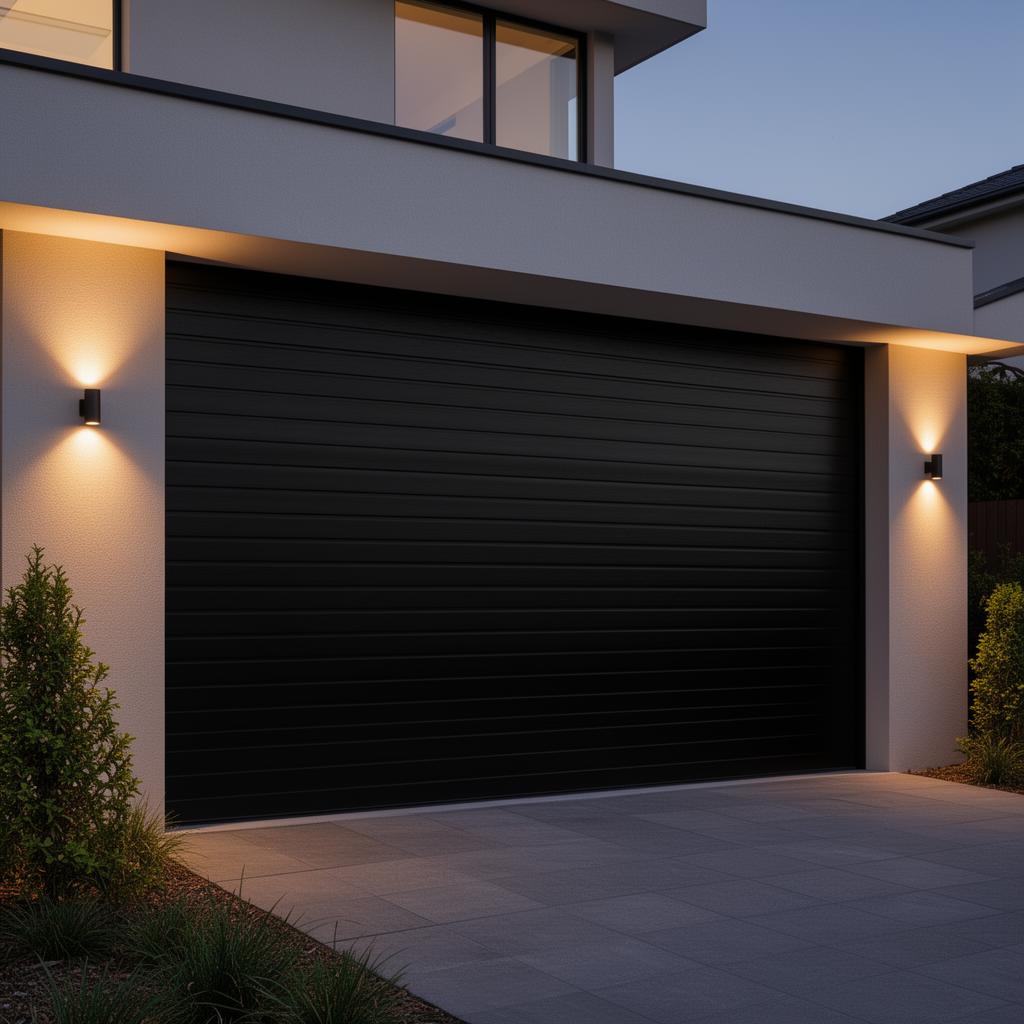
Side by side
Everything below assumes a competently installed door of decent specification, not a bargain import.
| Compact roller | Sectional | |
|---|---|---|
| Headroom needed | Small, around 205 mm for a compact box | More, the panel curve needs clear ceiling depth |
| Ceiling space used | None inside the garage | Full door depth runs back under the ceiling |
| Insulation | Foam-filled slats, moderate | Double-skin panels, best in class |
| Driveway clearance | Excellent | Excellent |
| Weather sealing | Good | Very good, with full perimeter seals |
| Best for | Tight openings, storage on ceiling hooks | Attached, heated or converted garages |
When a roller is the better choice
If your garage ceiling is already doing a job, storage racking, a loft hatch, a boiler, exposed joists, a roller keeps all of it. It also handles openings where a lintel sits low, and it is the more forgiving option on slightly out-of-square brickwork common on older properties.
Rollers are also the quicker install. Most are done in a single visit with minimal disruption.
When a sectional earns its extra cost
Choose sectional if the garage shares a wall with living space, if you use it as a workshop or gym, or if you want the tightest weather seal. The double-skin panel construction makes a measurable difference to how cold the space feels in January, and the wider panel range gives you more finish options.
You need the ceiling depth for it, so check what is currently hanging up there before you commit.
What we fit most often
Across our residential work, compact rollers dominate replacements of tired up-and-over doors, because the headroom requirement is small and the price is accessible. Sectionals come into their own on newer builds and on garages that have been converted into usable rooms.
If you are genuinely undecided, our free survey settles it in ten minutes: we measure headroom and ceiling depth and tell you which options physically fit.
Questions we get asked
- Which is more secure?
- Both are secure when specified properly. Sectionals typically have more anchor points around the frame; quality rollers use anti-lift devices and a motor that holds the curtain. Security depends far more on build quality and installation than on the format.
- Which is quieter?
- A sectional on a good motor is generally the quieter of the two, because the panels run on rollers in a track rather than slats coiling into a box.
- Can I fit a sectional if my ceiling is low?
- Sometimes, low-headroom track kits exist, but they use up ceiling depth. We measure before recommending one so you are not sold something that will not clear your lintel.
- Do both come with insulation?
- Roller slats are foam-filled as standard on our range. Sectional panels are double-skin with a thicker insulating core, so they perform better if the garage is heated or attached.
- Which lasts longer?
- Both should give well over a decade with an annual service. Lifespan is driven by cycle count and maintenance, not by the door format.
Not sure which fits? We will measure and tell you
A free survey confirms headroom, ceiling depth and opening squareness, then you get prices for the options that actually fit.
Based at 31 Mount Street, Dromore (BT25) · covering Northern Ireland · 24/7 emergency repairs