Specifying a commercial door: shutter or sectional
Roller shutter or sectional door for a commercial unit?
On commercial work the question is rarely which door looks better. It is which door the building can accommodate, how many times a day it will cycle, and what happens to the unit when it fails.
We supply and install both across Northern Ireland, so this is a referee's view rather than a sales pitch. There is no published list price for commercial openings: they are quoted on the opening, the specification and the site, and the cost drivers are set out below so you can see what moves the figure.
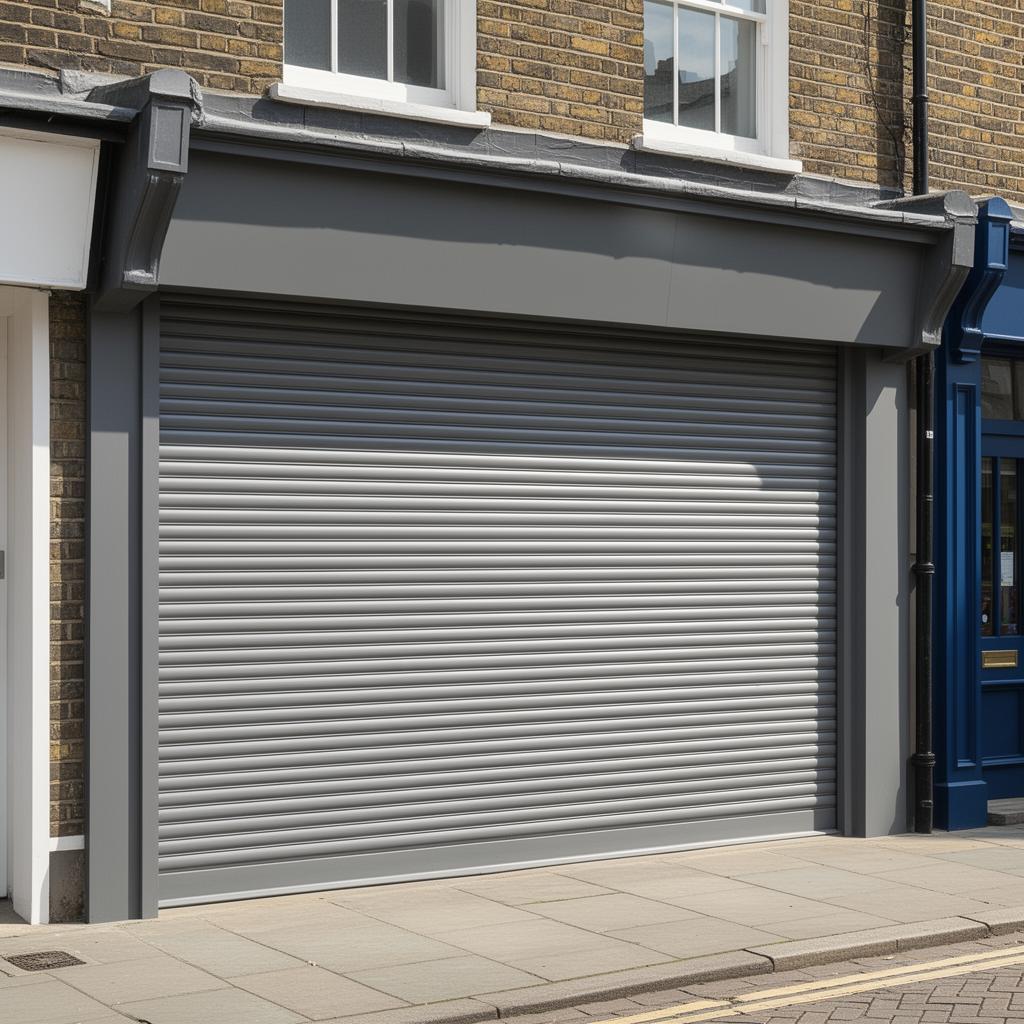
- Shutter strength
- Wide openings, minimal internal loss
- Sectional strength
- Insulation and sealing
- Key question
- Cycles per day
- Quoted on
- Opening, spec and site access
Read the building before the brochure
A shutter curtain coils above the opening and takes almost nothing from the floor area or the roof space behind it. That matters in a unit where racking, a mezzanine, a crane rail or service runs occupy the ceiling immediately inside the door.
A sectional door folds up into panels that travel back along tracks under the roof. That needs a clear zone inside the building, and on a shallow unit or one with low-level services that zone often does not exist.
- Steelwork, sprinkler pipework or lighting immediately inside the opening: the shutter is usually the simpler fit.
- Clear roof space and a need for a sealed, insulated envelope: the sectional earns its place.
- Very wide vehicular openings: shutters scale more easily across width.
- Openings that stay shut most of the day and back onto heated space: favour the sectional.
Cycle rate is the specification that gets missed
A door opened a handful of times a day and a door opened every few minutes are not the same product with a different price. Cycle rate drives motor selection, guide and bearing wear, and how quickly the door needs servicing.
Be honest about the busiest day rather than the average. Under-specifying a motor on a high-cycle loading bay is the most expensive mistake on a commercial door, because the failure arrives when the unit is busiest.
Where traffic is genuinely constant and the opening is internal or sheltered, a high-speed door is a separate conversation from either of these two, and we cover that specification on its own page.
Security and fire duty
Shutters are the default where the door itself is the security line: a solid or perforated lath curtain, bottom rail locking and no exposed lifting gear outside. Where a compartment line or an insurance requirement is involved, that sits in fire and security shutter territory rather than a standard door specification, and it must be specified deliberately.
A sectional door in a commercial opening is generally protecting an envelope that is already secure, with the shell, alarm and access control doing the work. It is a perfectly sound choice behind a secured yard, and a weaker one as the only barrier onto a public road.
Warmth, condensation and the working environment
If the unit is heated, or if condensation is a problem for stock or finishes, the sectional is the stronger performer: insulated panels with a continuous core and full perimeter sealing. Insulated shutter laths improve on a single-skin curtain but do not match a sealed panel door.
If the unit is unheated and the door spends much of the working day open, insulation is largely academic and you are buying width, robustness and speed of use instead.
- Heated workshop or trade counter: insulated sectional, sealed perimeter.
- Unheated store or yard access: shutter, specified for the opening size and cycles.
- Damp-sensitive stock: seal and insulate, and look at the whole envelope, not just the door.
What it costs and what pushes the price
Neither door has a headline price worth trusting, because a commercial opening is never standard. The drivers are consistent, though, and knowing them makes quotes comparable.
- Opening width and height, and whether new steelwork or a fixing angle is needed.
- Curtain or panel construction: single skin, perforated lath, or insulated.
- Motor duty and control gear matched to cycles, plus safety devices.
- Power supply position, and whether a new circuit is needed at the opening.
- Access for installation: working at height, live yards and out-of-hours fitting.
- Fire or security duty, which changes the product rather than dressing up the same one.
Which is right for you
Specify the shutter when the opening is wide, the internal clearance behind the door is compromised, the door is the security line onto a public boundary, or the space is unheated and the priority is durable daily access.
Specify the sectional when the unit is heated or climate-sensitive, the roof space inside is clear, the opening is a standard vehicular size, and a sealed insulated envelope is worth more to you than raw width.
Where the other option wins, we will say it plainly. We would rather quote the shutter you did not ask for than fit a sectional into a unit with no room for the tracks, and we would rather insulate a sectional properly than sell you a shutter for a heated workshop that will condensate all winter.
Questions we get asked
- Can you give me a price over the phone?
- Not a reliable one. Commercial doors are quoted on the opening, construction, motor duty and site access. Send the opening sizes and a photo and we will arrange a survey.
- Which handles a wide loading bay better?
- The shutter, usually. Curtains scale across width more readily, and they take very little clearance from inside the building behind the opening.
- Is a sectional door secure enough for a commercial unit?
- Behind a secured yard, yes. As the sole barrier onto a public road or where insurers set a requirement, a shutter or a specified security shutter is the sounder choice.
- How often should a commercial door be serviced?
- In line with how hard it works. High-cycle doors need attention far more often than a door opened a few times a day, and our industrial maintenance guide sets out what a service should cover.
- What if the door fails mid-shift?
- We run a 24/7 emergency call-out and cover commercial shutters and sectional doors alike, including getting a unit secured when a part has to be ordered.
- Should I be looking at a high-speed door instead?
- If traffic is near-constant and the opening is sheltered or internal, possibly. That is a different specification and we cover it separately rather than stretching either of these doors to do the job.
Send us the opening and how hard it works
Give us the width, height and a rough idea of daily cycles. We will specify the door properly, quote it on site and tell you if the cheaper option is the right one.
Based at 31 Mount Street, Dromore (BT25) · covering Northern Ireland · 24/7 emergency repairs