Specification research for commercial premises
Commercial roller shutter guide for Northern Ireland premises
Commercial roller shutters cover a wider range of jobs than the residential market, from a small retail shopfront in Lisburn or Portadown to a workshop opening taking regular vehicle traffic in an industrial estate near Craigavon. Specification needs to match how the opening is actually used, not just its size.
This guide covers the main decisions involved, insulated versus punched lath curtains, where a fire shutter is required, and what a service contract should cover once the shutter is in.
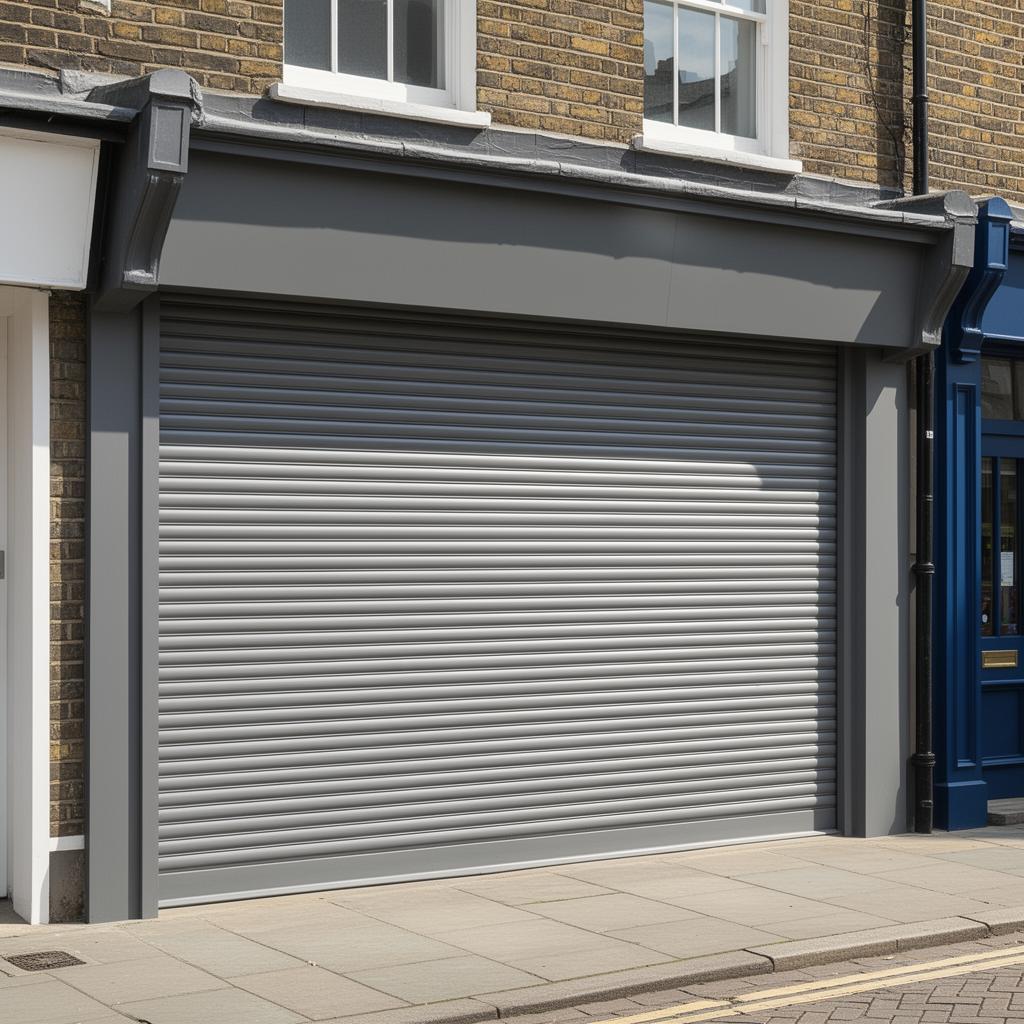
- Typical use
- Retail, workshop, warehouse, yard access
- Punched lath
- Ventilated, lower cost
- Insulated lath
- Solid curtain, better security and thermal
- Pricing
- Quoted per opening after survey
Insulated vs punched lath curtains
Punched lath shutters use a curtain with a pattern of small perforations, which allows some light and airflow through when closed. They cost less and suit units where ventilation or a degree of visibility matters, such as a shopfront where some sightline through the closed shutter is useful for passing patrols or staff checking the unit.
Insulated lath shutters use a solid, often foam-filled, curtain profile with no perforations. They give a better thermal seal, block sightlines completely, and generally offer stronger resistance to forced entry since there is no perforated section to attack. Workshops, storage units and anywhere holding stock overnight typically specify insulated lath.
- Punched lath: lower cost, some visibility and airflow, suits retail frontages.
- Insulated lath: solid curtain, better security and thermal performance, suits workshops and storage.
- Curtain gauge and slat profile both affect resistance to impact, not just the lath type.
- Guide rails and bottom bar fixings matter as much as the curtain for overall security.
Manual, electric and full-height openings
Small units can run on a manual shutter operated by a strap or crank, which is cost-effective but slow and physically demanding on wider openings. Most retail and workshop shutters over a certain width are motorised, both for speed and to reduce the daily physical load on staff opening up.
Full-height openings for vehicle or loading access need a shutter rated for the extra curtain weight and a motor sized accordingly, alongside safety features suited to an opening that vehicles and people share.
Fire shutters
A fire shutter is a distinct product designed to hold back fire and smoke for a specified period, tested and rated rather than a standard security shutter fitted with a fire label. Where a shutter forms part of a compartmentation strategy within a building, for example separating a loading bay from retail floor space, a fire-rated shutter and correct installation to the specification are required, and this is generally confirmed through the building's fire risk assessment or building control approval rather than guesswork.
Fire shutters typically close automatically on a signal from the building's fire alarm system as well as offering manual operation, and this interface needs to be tested as part of any servicing regime, not just the shutter mechanism itself.
Specification checklist for a new shutter
Before requesting quotes, gather the basic information that lets an installer specify accurately rather than guess.
- Opening width and height, and whether it takes vehicle or pedestrian traffic.
- Whether ventilation or visibility through the closed shutter is needed.
- Whether the shutter forms part of a fire compartmentation strategy.
- Available headroom for the roll box and any guide rail depth constraints.
- Frequency of use, a shutter cycling many times a day needs a motor and curtain rated for that duty.
Service contracts
A commercial shutter in daily use experiences far more cycles per year than a domestic garage door, and a failure mid-morning on a retail unit or workshop has a direct cost in lost trading time. A planned service contract catches wear in guide rails, springs, motor components and fire interfaces before they cause a breakdown, rather than waiting for a call-out.
What a contract should include varies by shutter type and use, but a reasonable baseline covers a scheduled visit, a written condition report, and a clear route to an emergency call-out if something fails between visits.
Questions we get asked
- How do I know if I need a fire-rated shutter rather than a standard one?
- This is determined by the building's fire strategy or fire risk assessment, typically where the shutter separates different fire compartments within a building. Check with whoever holds responsibility for fire safety in the building, or building control if it is a new installation.
- Can an existing standard shutter be upgraded to a fire shutter?
- No, fire shutters are a distinct tested product and mechanism, not an upgrade kit for a standard security shutter. Where a fire-rated opening is needed, it requires installing the correct product.
- What is the difference in security between punched and insulated lath?
- Insulated lath generally offers stronger resistance because there is no perforated section, though overall security also depends heavily on the guide rails, locking and bottom bar fixings rather than the curtain type alone.
- How often should a commercial shutter be serviced?
- This depends on cycle frequency and use, but an annual service is a reasonable minimum for most retail and workshop shutters, with more frequent checks for high-cycle or fire-rated shutters.
- Can a commercial shutter be repaired rather than replaced after damage?
- Often yes, curtain sections, guide rails and motors can frequently be repaired or replaced individually. A full replacement is usually only necessary after significant structural damage or where the shutter is genuinely at the end of its service life.
- Do you supply and fit these shutters or only repair them?
- We supply, install, service and repair commercial roller shutters. We do not manufacture the curtain or components ourselves.
Get a specification and quote for your unit
Tell us about the opening, how it is used, and whether fire compartmentation applies, and we will recommend a shutter specification and price for your premises.
Based at 31 Mount Street, Dromore (BT25) · covering Northern Ireland · 24/7 emergency repairs