Research on motorising or upgrading garage door control
Garage door automation and smart control
Automation has moved well beyond a remote that opens and closes the door. Modern motors control speed through the travel, hold position reliably, keep working through a power cut, and can be checked and operated from a phone. None of that is essential, a manual door still works perfectly well, but it changes daily convenience enough that most new installations now include it.
This guide explains the components involved and what to expect if you are adding automation to a door that has always been manual.
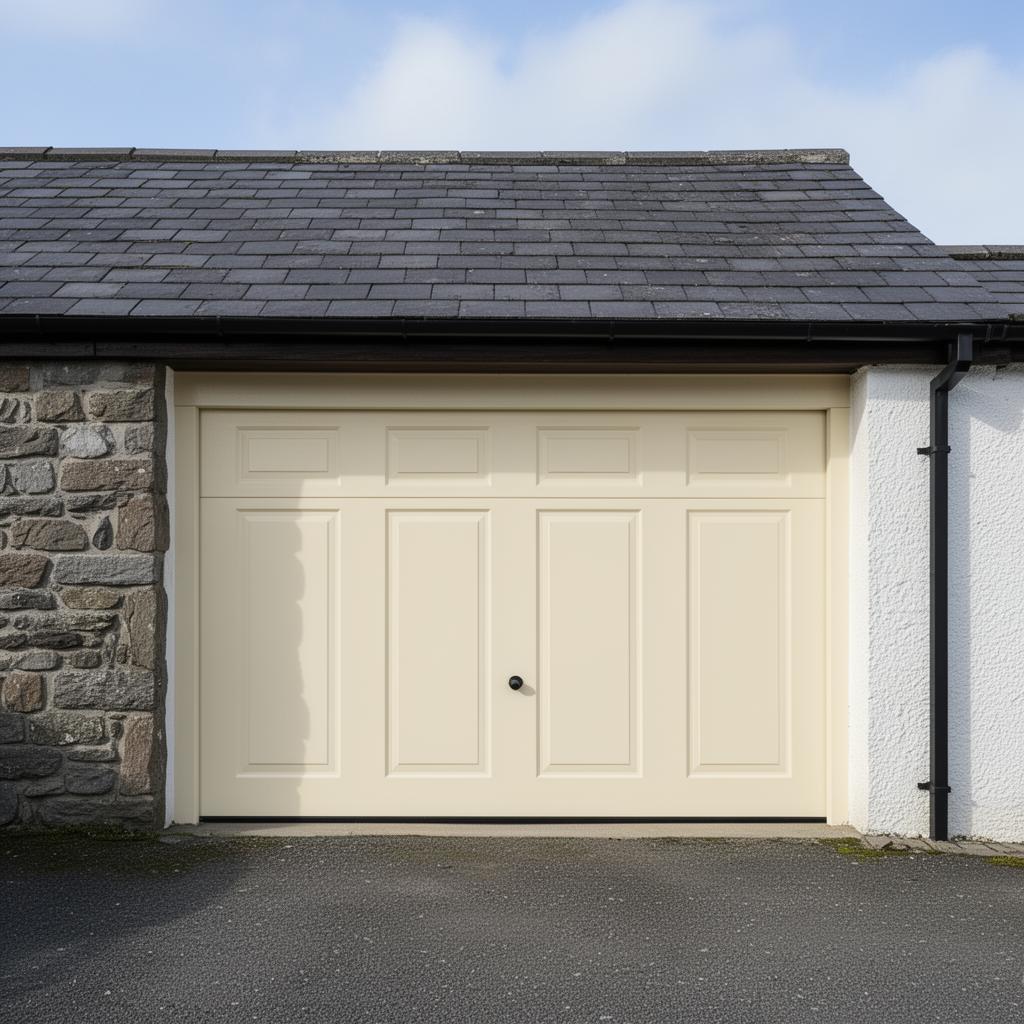
- Common motor types
- Tubular, trolley, direct drive
- Soft start/stop
- Reduces wear and noise
- Battery backup
- Keeps door working in a power cut
- Retrofit feasibility
- Most doors can be motorised
Motor types and where each is used
Roller doors typically use a tubular motor housed inside the roll itself, compact and hidden from view once the door is fitted. Sectional and up-and-over doors more commonly use a trolley operator that rides along an overhead rail and pulls the door via an arm, or a direct-drive motor that moves along a fixed rail without a chain or belt needing separate tensioning.
None of these is universally better, the right choice depends on the door type, the ceiling space available, and how much noise matters to you. A garage next to a bedroom benefits more from a quieter direct-drive or belt system than one at the far end of a driveway.
Soft start and soft stop
A basic motor drives the door at a constant speed and stops abruptly at each end of travel, which is harder on the mechanism and noticeably clunkier to live with. Soft start and soft stop ramp the speed up and down gradually, which reduces mechanical shock on the springs, cables and panel, and is quieter for anyone nearby.
This feature is now common even on mid-range motors, but it is worth confirming when comparing quotes rather than assuming every motor includes it.
Battery backup
If the garage is the main or only route into the house, a power cut leaving an electric door unable to open is more than an inconvenience. Battery backup keeps the motor operational for a limited number of cycles during an outage, using a battery that trickle-charges during normal operation.
It is a sensible addition on any door where the manual release is awkward to reach or where the garage is genuinely relied on for access, and it is far easier to fit at install than to retrofit to a motor that was not designed for it.
Smartphone and app control
App-connected motors let you open, close and check the status of the door from a phone, useful for confirming you actually closed it after leaving, or letting a tradesperson or delivery in remotely. Some systems also log every open and close event, which can be useful if more than one person uses the garage.
This relies on a stable home wifi connection reaching the garage, which is not guaranteed in a detached or outbuilding garage, so it is worth checking signal strength before specifying it.
- Confirm your garage gets a usable wifi signal before choosing an app-connected motor.
- Shared access for family members or trades is usually managed through the app rather than physical remotes.
- Some systems support voice assistant integration, check compatibility rather than assuming.
- A physical remote as backup is still worth keeping even with app control fitted.
Retrofitting automation to an existing door
Most manual doors can be motorised without replacing the door itself, provided the panel, springs and track are in good condition and rated to carry the additional load and cycle frequency a motor introduces. An engineer needs to check the door's condition first, since motorising a door with worn springs or a racked track simply accelerates the failure rather than fixing anything.
Retrofitting usually involves fitting a bracket or arm to the door, running power to the motor position, and setting travel limits and force settings so the door stops correctly and safely. On some older or non-standard doors, a compatible motor kit may not exist, in which case replacement becomes the more practical route.
Is automation worth it
For a door used daily, automation removes a genuinely tedious task and, done properly with soft start and stop, is gentler on the door than manual operation. For a door opened rarely, the cost is harder to justify. The middle ground, motorising at the point of replacement rather than retrofitting years later, is usually the more cost-effective route if a new door is already planned.
Questions we get asked
- Can any garage door be motorised?
- Most can, but the door and track need to be in sound condition first. An engineer should check springs, panel weight and track alignment before fitting a motor, since automation adds load and cycle frequency that a worn door may not handle well.
- How long does a retrofit installation take?
- A straightforward retrofit on a door in good condition is typically completed within a few hours, including wiring, setting travel limits and testing. Doors needing track adjustment or an electrical supply run take longer.
- What happens if the motor fails and I need to get the car out?
- Every motorised door should have a manual release, usually a cord or lever, that disengages the motor so the door can be operated by hand. This should be tested occasionally, not left unchecked for years.
- Does battery backup work through a long power cut?
- It is designed for a limited number of cycles rather than indefinite use, intended to get you in or out during an outage rather than replace mains power long term.
- Is app control secure?
- Reputable systems use encrypted, rolling-code style communication between the app and the motor. Keep the app and firmware updated and use a strong password on the associated account, the same basic precautions as any connected home device.
- Do I need a new remote if I already have one for an old motor?
- Usually yes, remotes are generally matched to a specific motor and brand, so replacing or retrofitting a motor typically means new remotes as well, though some universal remotes cover a range of models.
Considering automation for an existing door
An engineer can assess whether your current door is suitable for motorising and talk you through motor options, or price a new automated door if replacement makes more sense.
Based at 31 Mount Street, Dromore (BT25) · covering Northern Ireland · 24/7 emergency repairs