Planning a high-speed door installation
High-speed door installation: what to expect
A high-speed door installation runs in four stages: a site survey, a specification agreed with you, the fit itself, planned around your operation, and a handover where the controls and safety devices are set and shown to your team. We supply and fit high-speed doors for industrial and commercial sites in Northern Ireland.
What makes these jobs different from a standard shutter is that the door usually sits in a working route. Forklifts, pedestrians and temperature-controlled areas all shape how the door is chosen and when it can be fitted.
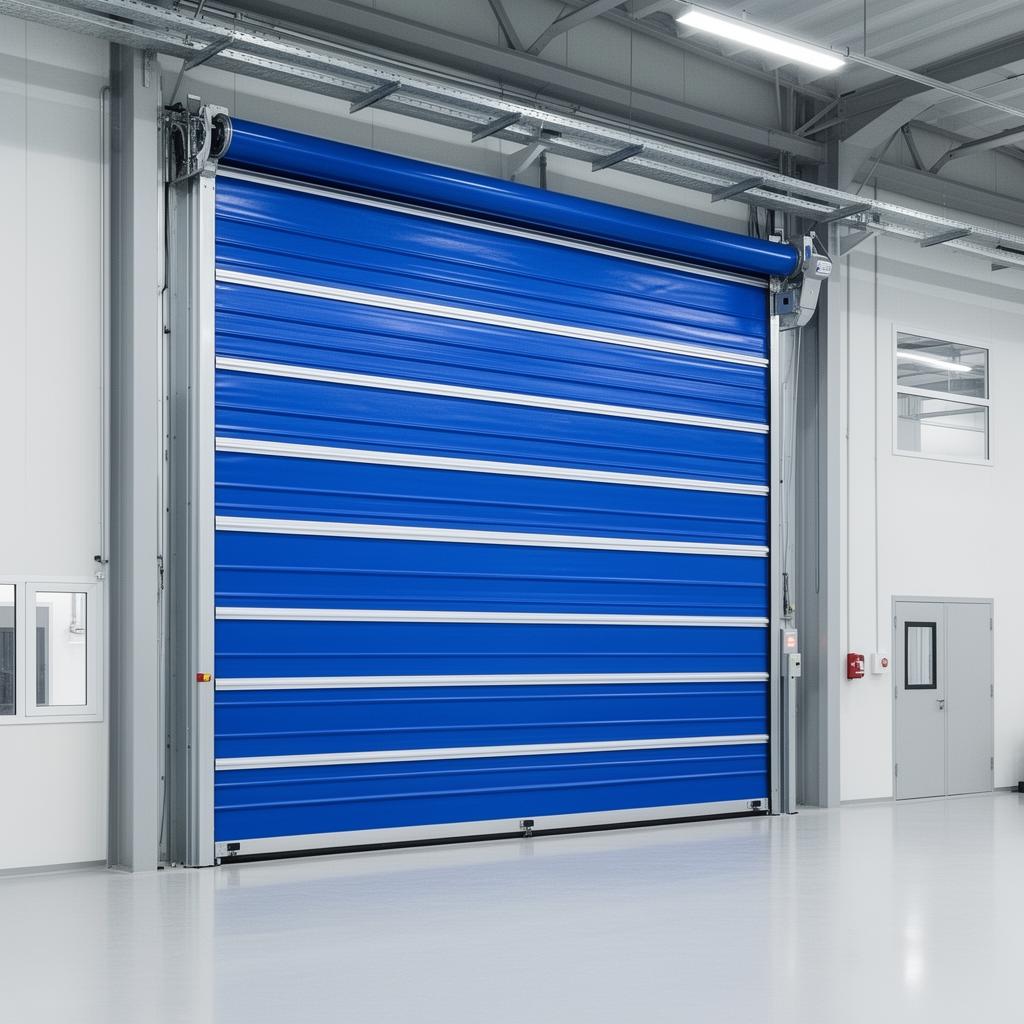
- Door families
- Fabric roll-up, rigid, cold-store, food-grade
- Fit planned
- Around your production or shutdown
- Safety
- Detection, light curtains, soft bottom edges
- After install
- Servicing and repairs available
Stage one: the site survey
We look at the opening and at the traffic through it. How often does it cycle? Is it forklifts, pallet trucks, people, or all three? Is there a temperature or hygiene difference either side? We also check the structure the door will fix to, headroom for the drum or coil, and where power and controls can be brought in.
Stage two: choosing the door
High-speed doors fall into a few families. The right one depends on what the opening does rather than on its size.
| Door family | Typical use |
|---|---|
| Fabric roll-up | Internal routes and busy loading areas; flexible curtain recovers from minor knocks |
| Rigid high-speed | External openings where security and wind resistance matter |
| Cold-store | Chilled or frozen areas where insulation and sealing are critical |
| Food-grade | Hygiene-controlled areas that need wash-down friendly materials |
Controls and activation
Because the door opens and closes so often, how it is triggered matters as much as how it is built. Options include radar or motion detectors for approaching traffic, induction loops in the floor, pull cords, push buttons and interlocks with other doors. The aim is a door that opens for the traffic it should, stays shut otherwise, and never closes on anything in the opening.
Stage three: planning the fit around your site
An industrial opening often cannot simply be closed off for a working day. Most high-speed installs are scheduled against a planned shutdown or a quiet shift so output is protected. Where an old shutter is coming out, removal is sequenced so the opening is secure at the end of each working period.
- Agree access, working hours and any permits before the day.
- Keep the traffic route clear while the frame and drive are fitted.
- Allow time at the end for commissioning, not just fitting.
Stage four: commissioning and handover
Once the door is up, speeds, open height and close delay are set to suit your traffic, and every safety device is tested: light curtains, safety edges and any detection. Your team is shown how to operate the door, what the controls do and what to do if it stops.
After installation
High-speed doors work hard, so a service plan keeps them reliable. If one is damaged or stops, our commercial repair team covers 24/7 call-outs.
Questions we get asked
- Can a high-speed door be fitted without stopping production?
- Usually the fit is planned against a shutdown or quiet shift so that disruption is kept to a minimum. We agree the timing with you at survey stage.
- Fabric or rigid: which do I need?
- Fabric suits busy internal routes and recovers well from knocks; rigid suits external openings where security and wind load matter. The survey settles it.
- Do you remove the existing door?
- Yes. Where a high-speed door replaces an old shutter, removal is part of the installation.
- Do you service high-speed doors after fitting?
- Yes. Servicing and repairs are available, including 24/7 call-outs for commercial and industrial doors.
Planning a high-speed door?
Tell us what passes through the opening and how often, and we will arrange a survey and a clear specification.
Based at 31 Mount Street, Dromore (BT25) · covering Northern Ireland · 24/7 emergency repairs