Product research on sectional doors
Sectional garage doors explained
A sectional door is built from horizontal panels hinged together, which travel up a pair of vertical tracks, curve backwards, and run flat under the ceiling. That geometry is what gives a sectional its best-in-class weather seal and insulation, and it is why they are the default recommendation for attached or converted garages.
This guide breaks down how the panels are built, the tracking options fitters actually use, and where glazing genuinely adds value rather than just cost.
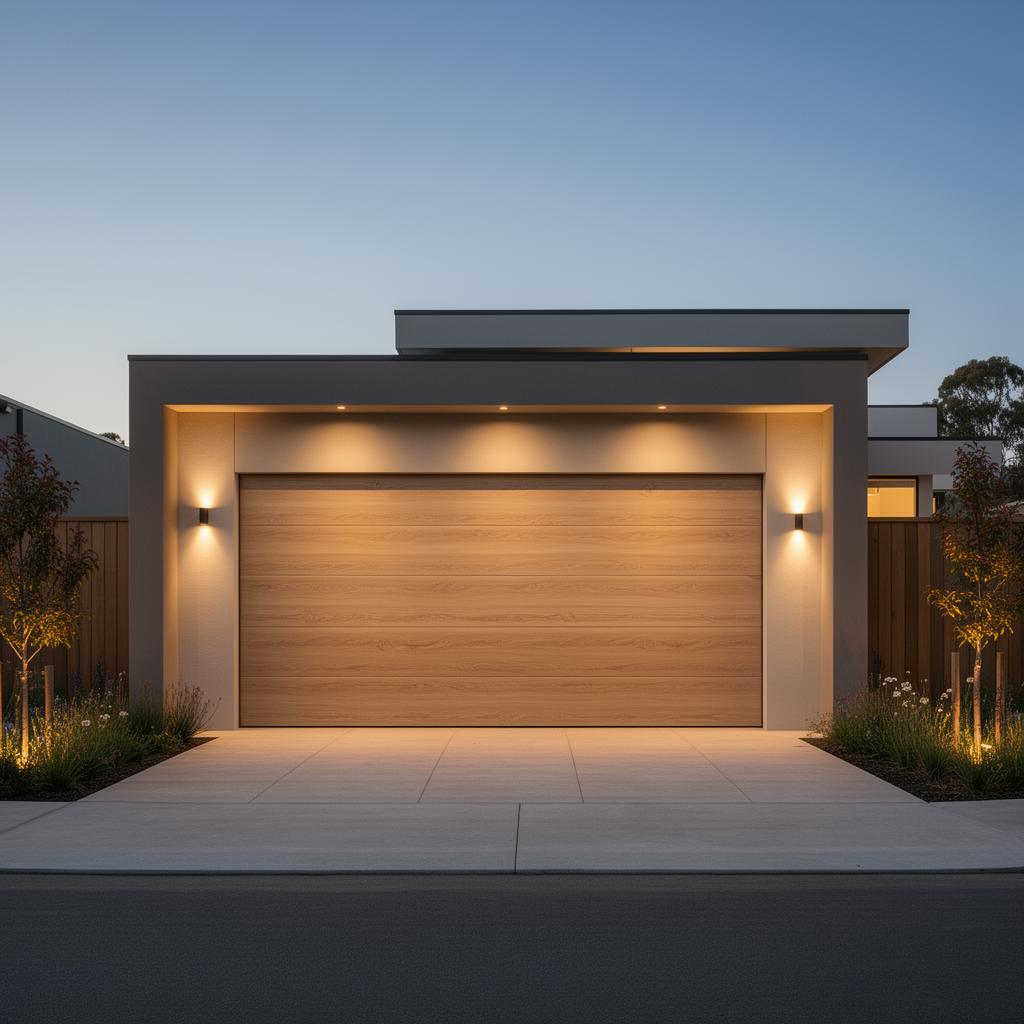
- Insulated sectional, fitted
- £1,250, £2,200
- Panel construction
- Double-skin steel, foam core
- Ceiling depth needed
- Full door height, approx
- Best suited to
- Attached or heated garages
How a sectional panel is built
Each panel is two skins of galvanised steel with an injected polyurethane foam core bonded between them, which is what gives sectionals their thermal performance advantage over a single-skin roller slat. The panels interlock at the joints and each carries a hinge and roller assembly that runs in the track.
Better ranges use thicker steel gauges and a continuous foam fill rather than a thinner core, which shows up as a difference in weight and rigidity when you compare doors side by side in a showroom.
Tracking options
The track layout is chosen to suit ceiling depth and how the space behind the door will be used.
- Standard vertical track: the usual layout, needs the most ceiling depth as the door runs flat overhead.
- Low headroom track: a tighter curve that reduces the headroom needed above the opening, useful where a lintel sits close to the ceiling.
- High lift track: the door runs further back before flattening, freeing wall space for storage or a workbench below.
- Side room track (vertical lift): rarely needed domestically, keeps the ceiling completely clear, used where headroom is very restricted but wall space is not.
Headroom and ceiling depth, honestly
Sectionals need more headroom than a compact roller box and, unlike a roller, they also need clear ceiling depth for the horizontal run. If your garage has exposed roof trusses, a loft hatch, or a boiler flue in that space, we check it during the survey rather than assuming it will simply fit.
This is the main reason some older Northern Ireland garages, particularly those with a low pitched roof, end up better suited to a roller despite a sectional's superior insulation.
Insulation values in practice
Double-skin panels give a noticeably warmer garage than a single-skin door, which matters most where the garage shares a wall with a bedroom or utility room, or where it has been converted into a gym or office. The perimeter seals fitted to a sectional frame also close the gaps at the sides and base more completely than most roller installations.
If the garage is detached and unheated, this advantage is real but less valuable, and a foam-filled roller may do the job for less money.
Where glazing earns its keep
Vision panels let daylight into a converted garage used as a home office or gym, and they can lift the look of a modern build. On a workshop or storage garage they add little beyond cost, and every glazed panel is a slightly weaker point for security and insulation than a solid one.
If security is a priority, keep glazing to the top panel only, well above reach, rather than at door height.
Sectional specification comparison
A quick reference for the choices that matter most.
| Feature | Standard spec | Upgraded spec |
|---|---|---|
| Panel core | Foam-filled, standard gauge | Thicker foam, heavier steel gauge |
| Track | Standard vertical | Low headroom or high lift |
| Glazing | None or top panel only | Multiple panels, full width |
| Seals | Standard perimeter brush | Full compression seal set |
Questions we get asked
- Do sectional doors need more maintenance than rollers?
- Both need an annual service covering springs, rollers and tracks. Sectionals have more moving hinge points across the panels, so a thorough check matters, but neither format is meaningfully higher maintenance than the other when serviced yearly.
- Can I fit a sectional if I already have storage on the ceiling?
- Sometimes a low headroom or high lift track avoids the clash, but if the ceiling space is fully used for racking, a compact roller is usually the more practical choice.
- Are sectional doors more secure than rollers?
- A sectional typically has more fixing points around the frame, which helps against forced entry, but overall security depends more on lock quality, motor type and installation than the door format alone.
- How much does glazing add to the price?
- It varies by panel size and pattern, but expect a noticeable increase over a solid door, more if you glaze multiple panels rather than just the top one.
- What is the typical lifespan of a sectional door?
- Well over a decade with an annual service, similar to a quality roller. Panel finish and hardware quality make more difference to lifespan than the door type itself.
- Will a sectional fit a rendered NI bungalow with a low roofline?
- Often yes with a low headroom track, but it depends on the exact lintel height and roof pitch. We measure this on a free survey before recommending a sectional over a roller.
Considering a sectional for your garage
Book a free survey and we will check headroom and ceiling depth, then quote a sectional against a roller so you can compare on real figures.
Based at 31 Mount Street, Dromore (BT25) · covering Northern Ireland · 24/7 emergency repairs