Product research before buying a roller door
Choosing the right roller garage door
Roller doors are the most common replacement we fit across Northern Ireland, mainly because the box sits above the opening and the curtain coils up without needing the ceiling depth a sectional demands. Not every roller is the same specification, though, and the terminology on comparison sites is often vague.
This guide covers the two main formats, compact and continuous curtain, how slat construction affects insulation and noise, and the situations where we would steer you towards a sectional or side-hinged door instead.
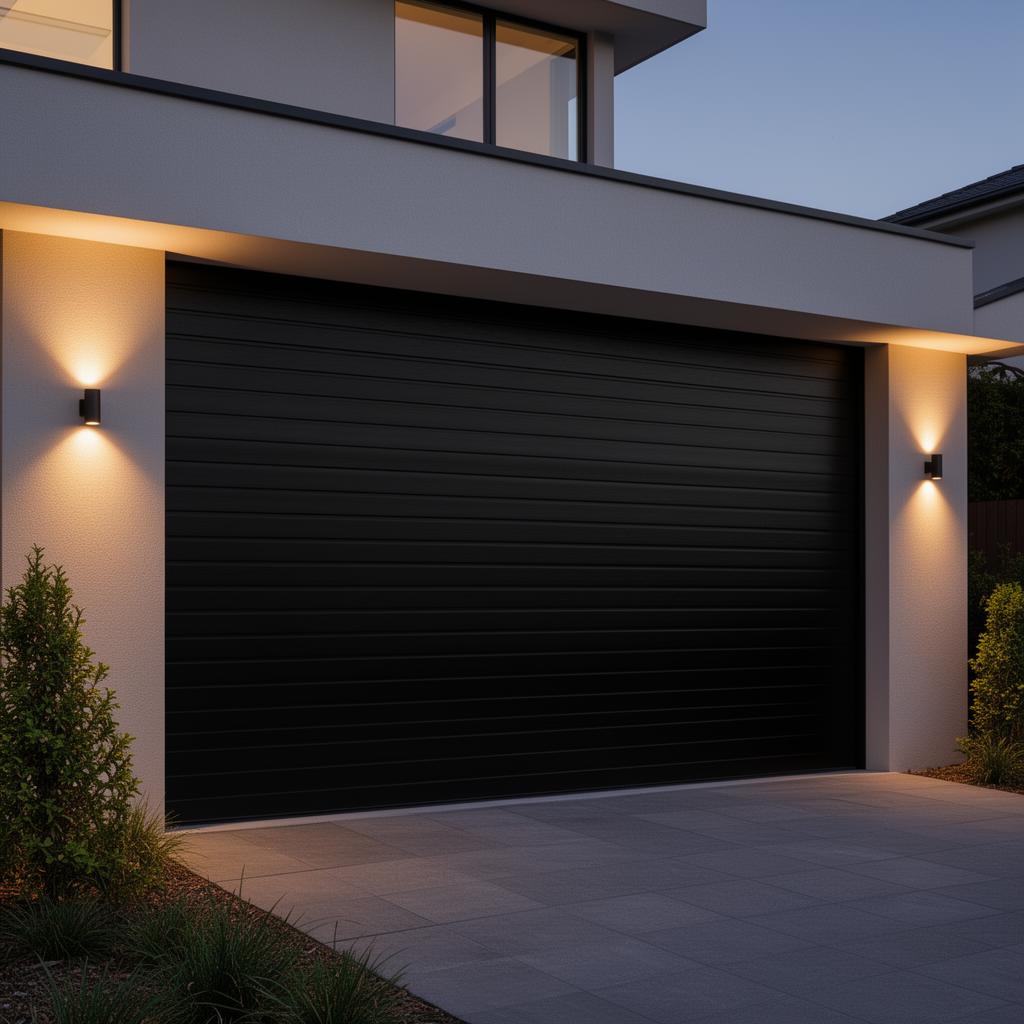
- Manual compact roller, fitted
- from £789*
- Typical headroom needed
- around 205 mm
- Electric compact roller
- £1,050, £1,600
- Continuous curtain
- quoted per opening
Compact vs continuous curtain
A compact roller has small, individually jointed aluminium slats that coil tightly into a small box, which is why it suits domestic openings with limited headroom. A continuous curtain door uses a single galvanised steel curtain that spools onto a drum, more common on commercial and industrial doors where cycle counts are far higher.
For a house, compact is almost always the right format. Continuous curtain doors are heavier, cost more, and their advantages, higher cycle life, greater wind resistance, only matter on commercial premises or very large openings.
Slat types and what they change
Slat gauge and fill determine how the door feels day to day, not just how it looks from the drive.
- Foam-filled aluminium slats: the standard specification, moderate insulation, quiet operation, resists dents better than bare aluminium.
- Single-skin aluminium: cheapest option, adequate for a detached garage with no heating, noisier and offers little insulation value.
- Steel curtain: used mainly on continuous curtain commercial doors, chosen for security and cycle life rather than thermal performance.
Headroom and box size
A compact box typically needs around 205 mm of clear space above the opening, though the exact figure depends on the width. This is the single most common reason a roller gets specified over a sectional on older Northern Ireland houses, where the lintel often sits close to the eaves and there is no room for a sectional's curved track.
We always measure headroom on site rather than relying on a rough guess, because a box that will not physically fit is not a specification decision, it is a return visit.
Insulation on a roller door
Foam-filled slats give a reasonable improvement over bare aluminium but will never match a double-skin sectional panel for thermal performance, because the slat joints and the coiling action limit how thick the fill can be. If your garage is attached to the house and heated, factor this in before choosing purely on price.
For garages used for storage, tools or a car that is not driven daily, the difference is rarely noticeable in practice.
Roller specification comparison
A simple way to see where each option sits.
| Specification | Insulation | Typical use | Fitted price guide |
|---|---|---|---|
| Single-skin aluminium | Low | Detached, unheated garage | £789, £950 |
| Foam-filled compact | Moderate | Everyday domestic use | £950, £1,600 |
| Continuous curtain steel | Low, security-focused | Commercial and industrial | Quoted per opening |
When a roller is the wrong choice
A roller is not the right fit if the garage is heated or converted and thermal performance matters more than headroom, if you want the widest colour and glazing choice, or if the opening is unusually tall and narrow, where sectional and side-hinged formats often handle proportions more neatly.
It is also worth reconsidering a roller if the box would sit in a visually awkward spot on a period frontage, in which case a timber-effect side-hinged door can look more in keeping.
Questions we get asked
- What is the difference between compact and mini compact rollers?
- Mini compact boxes are a smaller variant designed for openings with very limited headroom, usually under 200 mm. They use the same slat principle but a tighter coil, and are worth mentioning to us if your lintel sits particularly low.
- Are roller doors noisy?
- Foam-filled slats on a properly tensioned curtain are reasonably quiet. Noise usually comes from worn guide rails, loose brackets or an ageing motor rather than the slat design itself, which is why servicing matters.
- Can a roller door be insulated to sectional standard?
- Not quite. Foam-filled slats improve on bare aluminium but cannot match the thickness of a double-skin sectional panel, because the slats need to flex and coil into the box.
- Do continuous curtain doors suit a domestic garage?
- Rarely. They are built for high cycle counts and commercial security requirements, and the cost and weight are unnecessary for a house. We would only specify one where a homeowner has an unusual security requirement.
- How much headroom do I actually need?
- Roughly 205 mm for a standard compact box, though this varies with door width and specification. We confirm the exact figure on a free site survey before quoting.
- Will a roller work on an unusually wide opening?
- Yes, up to a point, but very wide single openings sometimes suit a sectional better for structural and aesthetic reasons. We will tell you honestly if a roller is not the ideal format for your opening.
Not sure if a roller suits your opening
Book a free survey and we will measure your headroom, tell you which slat specification suits your garage, and give a written fitted price.
Based at 31 Mount Street, Dromore (BT25) · covering Northern Ireland · 24/7 emergency repairs