Product research on side-hinged doors
Side-hinged garage doors: timber vs steel
Side-hinged doors work like an oversized pair of house doors, opening outwards on hinges rather than lifting overhead. That makes them the natural choice where you need full, unobstructed access to the opening, most commonly a garage used as a workshop, or a period property where an overhead track would look wrong.
This guide compares timber and steel construction, the practicalities of the opening arc, and the ironmongery and sealing details that separate a door that lasts from one that swells and sticks within a couple of winters.
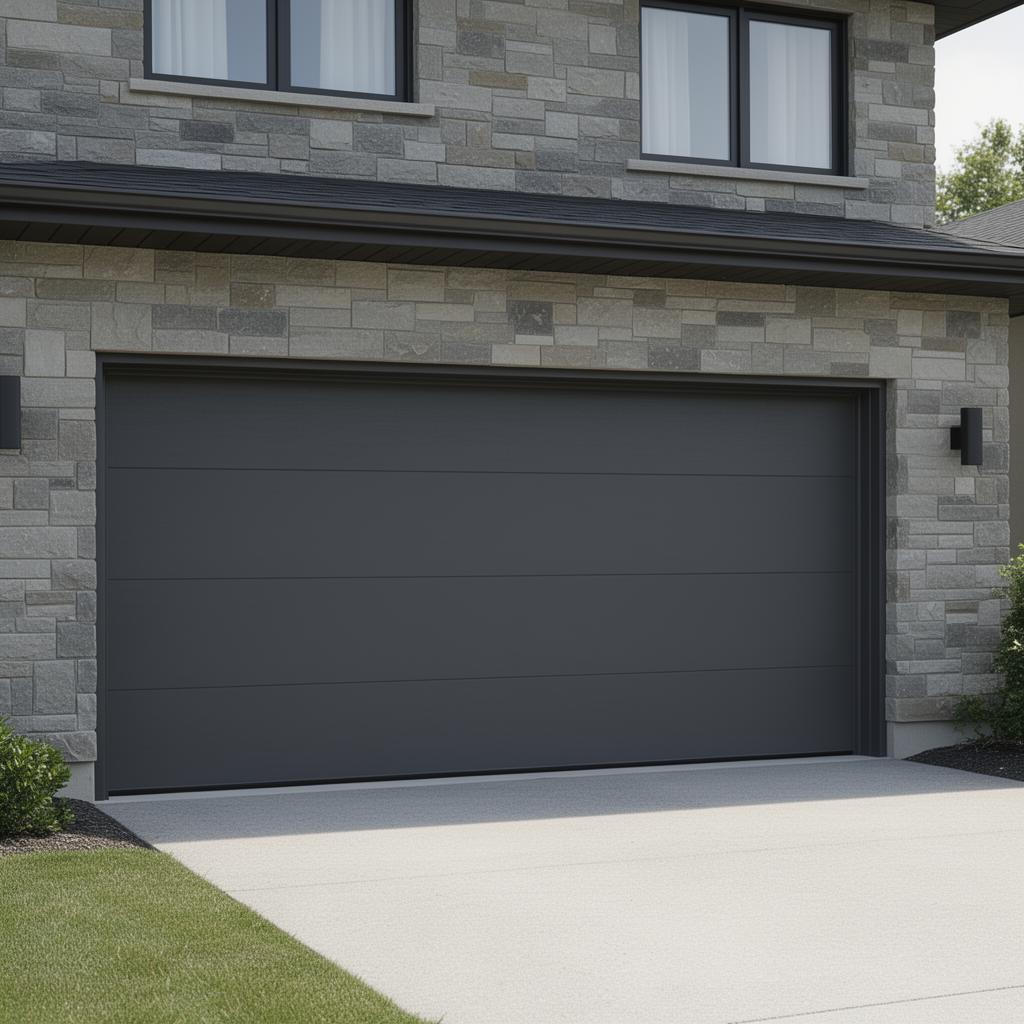
- Timber-effect side-hinged, fitted
- £1,100, £1,900
- Opening style
- Outward swing on hinges
- Best suited to
- Workshops, period frontages
- Driveway clearance needed
- Full arc in front of door
Timber vs steel construction
A timber door gives the most authentic period look and can be painted to match joinery elsewhere on the house, but it needs more regular maintenance, repainting or re-staining every few years to keep water out of the joints, particularly on exposed gable ends common in rural Northern Ireland.
A steel or GRP timber-effect door gives a similar appearance with a factory-applied finish that holds up far better against wind-driven rain and coastal salt air, at the cost of some of the tactile authenticity of real timber. For most homeowners we recommend the timber-effect option unless the property is listed or in a conservation setting where genuine timber is expected.
Why workshops suit side-hinged
A side-hinged door gives you the full width of the opening at floor level with nothing overhead, no track, no coiled curtain, which matters if you are moving sheet materials, a motorbike, or tall equipment in and out. It also lets you prop one leaf open for ventilation while working, something neither a roller nor a sectional can do.
The trade-off is that you need clear space in front of the opening for the doors to swing through, so a side-hinged door does not suit a short driveway where a car is parked close to the garage.
Opening arc and driveway space
Each leaf swings out to roughly 90 degrees, sometimes further with the right hinge, and needs to clear any adjacent wall, downpipe or parked vehicle. On tight Northern Ireland driveways this is the single biggest factor ruling a side-hinged door in or out, more than price or appearance.
We measure the available swing space on site, including any sloped or uneven ground in front of the opening, before recommending this format.
Ironmongery choices
Handles, hinges and bolts are as much a style decision as a functional one on a side-hinged door.
- Ring or T-bar handles in black or antique finishes suit period and rural properties.
- Automatic top and bottom bolts improve security without needing to reach awkward corners each time.
- Heavy-duty hinges rated for the door's weight prevent sagging, particularly important on solid timber leaves.
- A cane bolt or ground socket keeps an open leaf secure in wind, worth specifying on exposed sites.
Weather sealing
The meeting edge where the two leaves close together is the weak point on any side-hinged door, and it is where draughts and driving rain get in if the seal is poor. Good doors use a rebated or overlapping centre join with a compression seal, rather than simply butting two flat edges together.
Ground clearance also needs to be set carefully, tight enough to seal out rain, loose enough that the door does not drag as timber expands in wet weather.
Timber vs steel comparison
A summary for comparing the two main construction options.
| Timber | Steel or GRP timber-effect | |
|---|---|---|
| Appearance | Most authentic, paintable | Close match, factory finish |
| Maintenance | Repaint or restain periodically | Low, occasional clean |
| Weather resistance | Good if maintained | Very good as standard |
| Typical use | Period and listed properties | Most residential replacements |
Questions we get asked
- Can a side-hinged door be automated?
- Yes, with a suitable ram-style operator on each leaf, though it is a less common request than automating a roller or sectional. It adds cost and is worth discussing at quote stage if you want it.
- Do side-hinged doors work on a narrow driveway?
- Only if there is enough space for the leaves to swing out fully. On short or narrow driveways a roller or sectional is usually the more practical choice.
- How often does a timber side-hinged door need repainting?
- Typically every two to four years depending on exposure, sooner on a coastal or very exposed site. Steel and GRP timber-effect doors need far less attention.
- Are side-hinged doors as secure as sectional or roller doors?
- With good hinges, automatic bolts and a solid frame, security is comparable. The main risk on a poor-quality door is weak hinges or a single central lock rather than the hinged format itself.
- Can I fit a side-hinged door in an existing up-and-over frame?
- Sometimes, but the frame and opening often need adapting, since the hardware and hanging points differ. We assess this during a free survey.
- Do side-hinged doors suit a workshop better than a roller?
- Generally yes, because you get the full opening clear at floor level with nothing overhead, which matters when moving large items or ventilating the space while working.
Weighing up a side-hinged door for your workshop
Book a free survey and we will check your driveway swing space, talk through timber versus steel, and give a written fitted price.
Based at 31 Mount Street, Dromore (BT25) · covering Northern Ireland · 24/7 emergency repairs